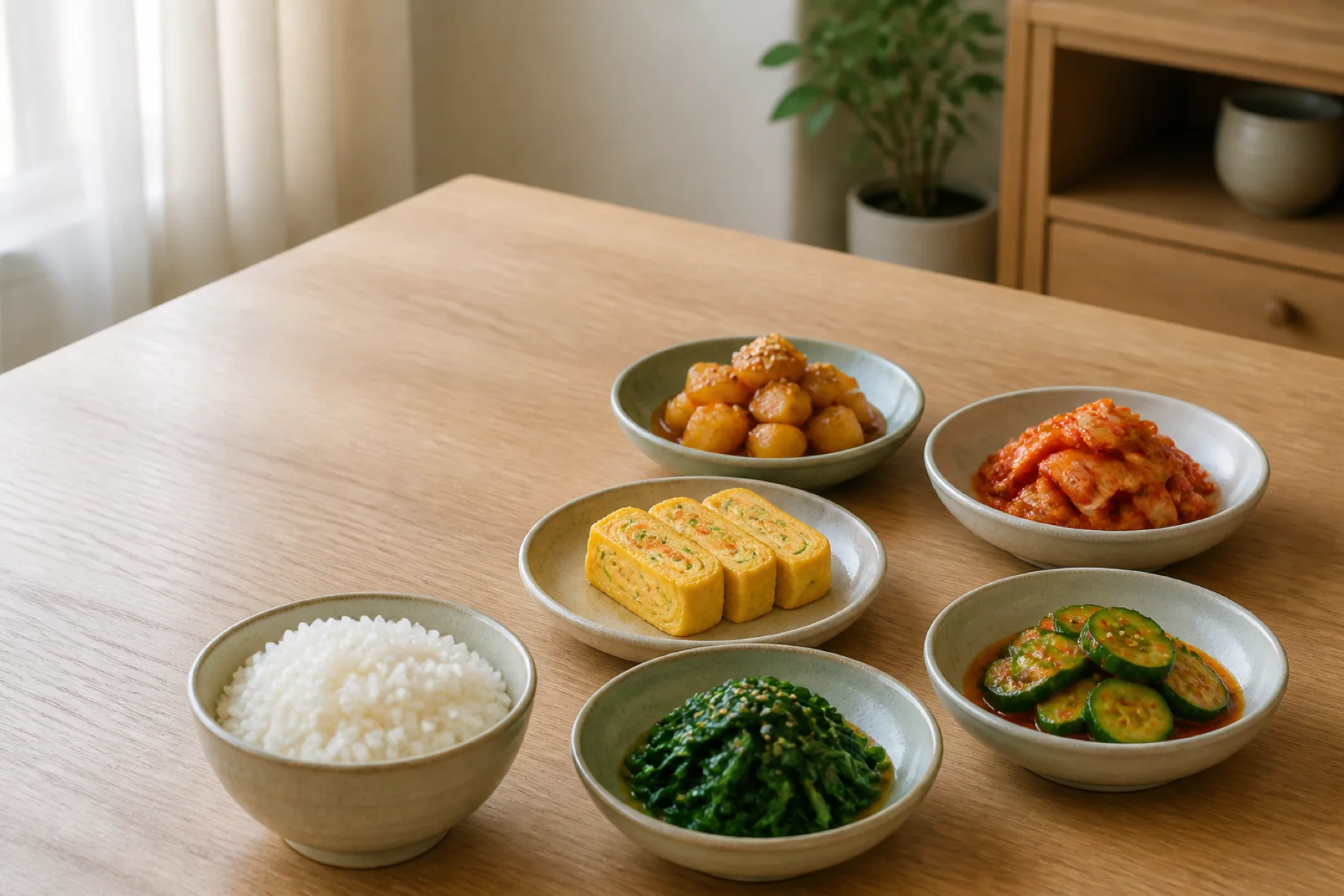
A Korean breakfast can look much like another meal: rice, soup, kimchi, and leftovers or freshly prepared banchan. It can also be toast, fruit, yogurt, a convenience-store roll, coffee, or nothing at all.
A warm home breakfast might pair yesterday’s vegetable dishes with fresh rice and a quick soup. A lighter option might be juk, or rice porridge, with a mild garnish.
The practical idea is not that breakfast must be Korean or elaborate. It is that savory breakfast is valid and leftovers can be planned, stored, and reused safely.
Age, commute, work, school, region, and household preference matter more than a single traditional-breakfast label.
Sources
- Leftovers and Food Safety — USDA FSIS, accessed 2026