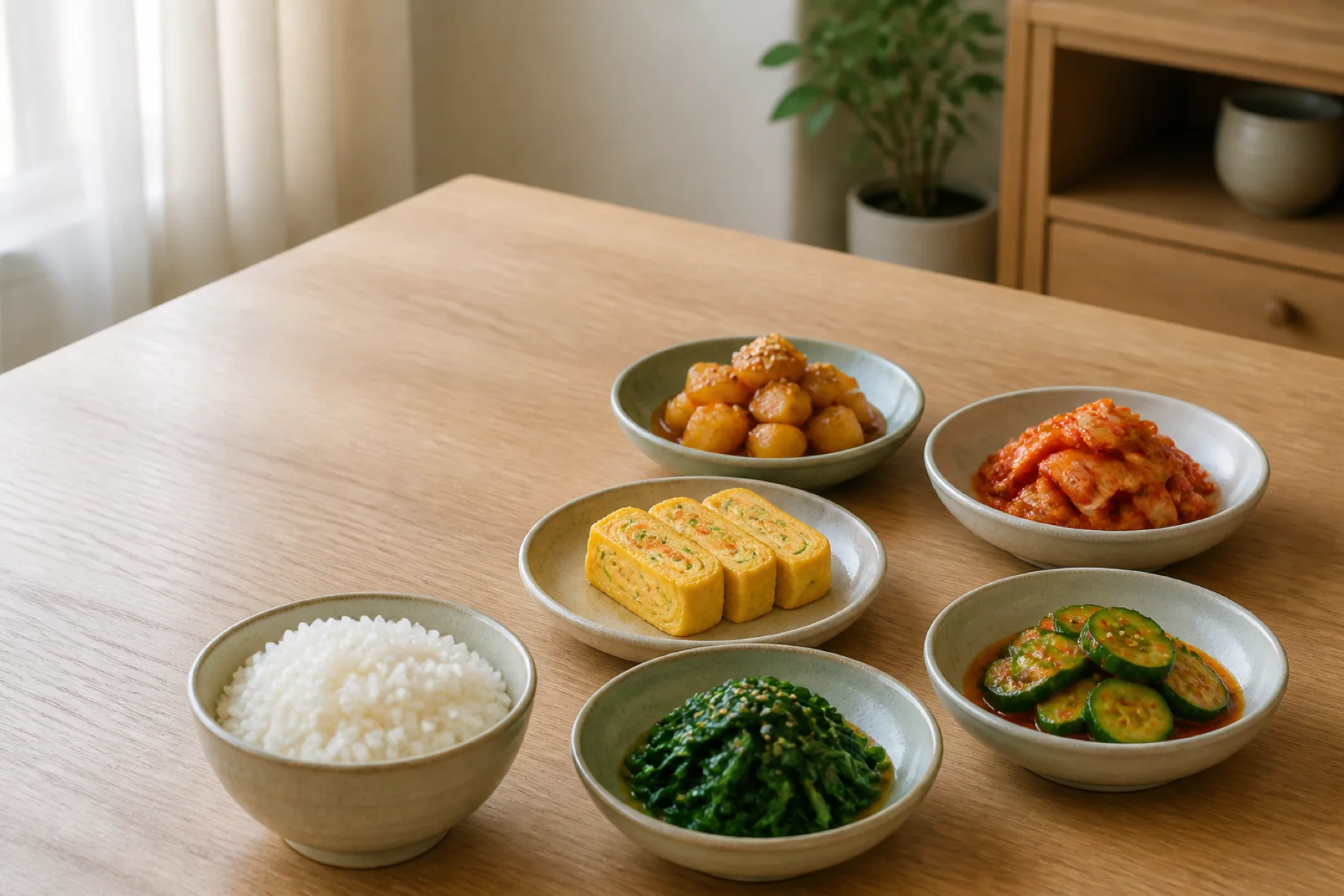
Everyday Korean eating is better understood as a flexible table pattern than a fixed menu. Rice, soup or stew, kimchi, and several preparations may share the table, but real households adapt to schedules, appetite, cost, and what is already available.
The word bap means cooked rice, yet it can also stand for a meal and the care around it. That social meaning does not make every shared meal nutritionally ideal; it reminds us that eating is practical, relational, and cultural.
Variety can emerge through rotation rather than preparing many new dishes each night. Wash and season greens, make one braise, and keep one fermented item available, then combine small portions with a freshly cooked staple.
Korean dietary patterns are diverse and changing. This article does not claim that nationality or one cuisine causes health or longevity.
Sources
- What bap means to Koreans — Korea.net, accessed 2026