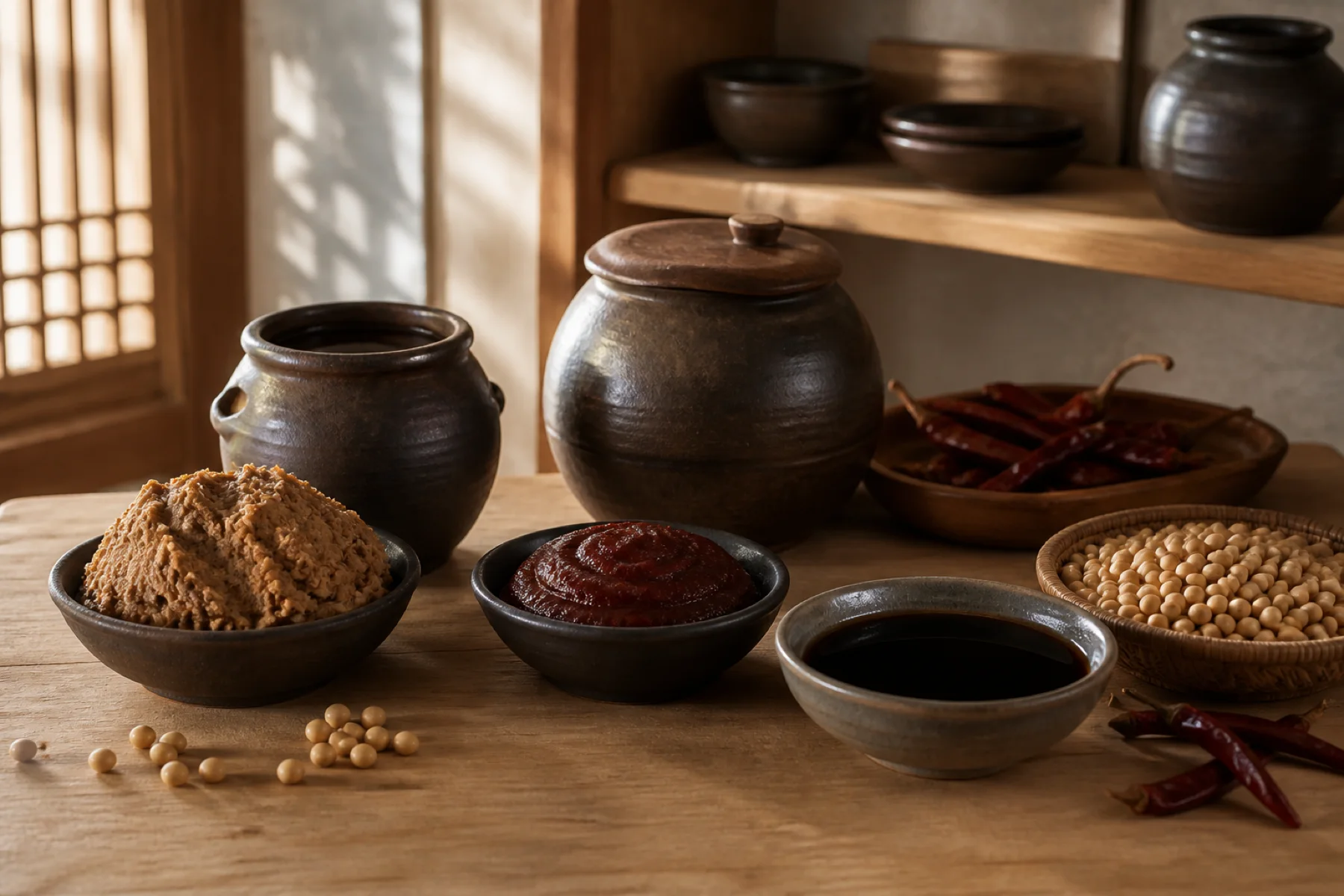
Korean fermentation extends beyond kimchi. Doenjang is fermented soybean paste, ganjang is soy sauce, and gochujang commonly combines fermented soybean material with red pepper and grain.
These ingredients work first as seasonings. Doenjang builds savory depth in stew or dressing, ganjang seasons countless dishes, and gochujang brings heat, sweetness, salt, and fermentation-derived flavor.
Labels matter because wheat, soy, sweeteners, sodium, and production methods vary. Products are heterogeneous, and many microbes do not remain live after heating or processing.
Treat these staples as foods with culinary and cultural value, not medicine. A spoonful of paste is not a probiotic or clinical promise.
Sources
- Comparative fermented-food review — PubMed Central, accessed 2026